

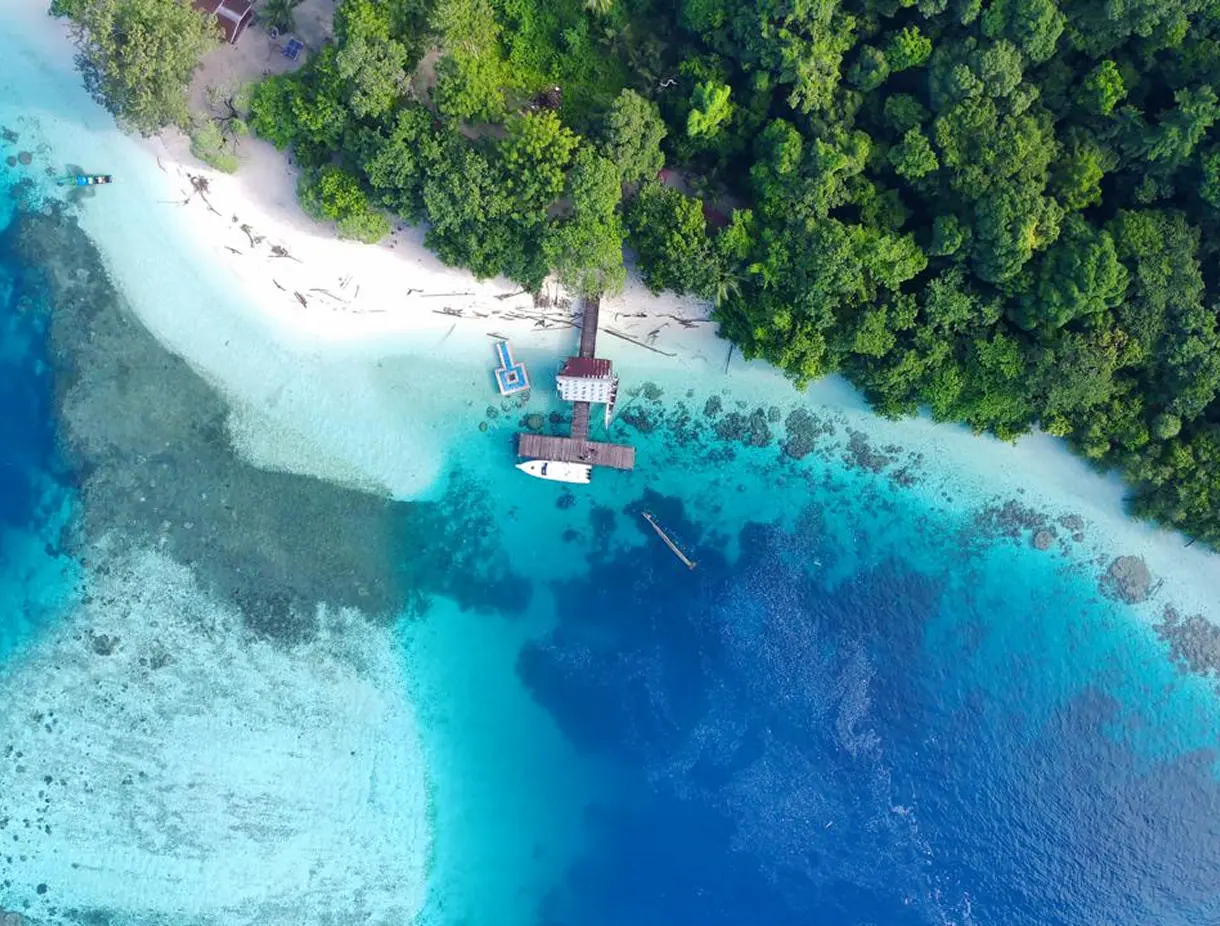
Tucked away at the northwestern tip of Papua’s Bird’s Head Peninsula, Raja Ampat remains one of the last truly wild corners of Southeast Asia. Its name — meaning “Four Kings” — refers to the four main islands of Waigeo, Batanta, Salawati, and Misool. Together with hundreds of smaller islets and cays, they form an archipelago so biologically rich that marine scientists still discover new species with every research expeditio
Our carefully crafted 4-day, 3-night itinerary balances adventure, relaxation, and cultural immersion — giving you a genuine taste of this paradise without the overwhelm of an unplanned trip.
Day-by-day itinerary
- Arrival in Sorong — Sail to Waisai
Land at DEO Airport Sorong and transfer to the port. Board a speedboat to Waisai, capital of Raja Ampat. Check in to your eco-resort, enjoy a sunset dinner over the bay, and prepare for the days ahead with a briefing from your local guide. - Wayag Islands — Karst Hills & Snorkeling
An early morning cruise brings you to the legendary Wayag lagoon. Hike the karst hills for a breathtaking panoramic view, then descend for a snorkel session above coral gardens teeming with life. Lunch is served on a secluded white-sand beach. - Pianemo & Arborek Village
Visit Pianemo for another stunning viewpoint, then sail to Arborek — a traditional fishing village where friendly locals weave grass skirts and dance the Yospan for guests. Afternoon freediving or certified dive at Cape Kri, one of the world’s highest-recorded fish-count spots. - Piaynemo Sunrise & Departure
Rise before dawn for a golden-hour kayak through a mangrove tunnel. A final breakfast at the resort, souvenir shopping at the local market, then speedboat back to Sorong for your onward flight — memories guaranteed to last a lifetime.
What makes Raja Ampat unmissable
Scientists estimate that Raja Ampat’s waters hold roughly 75% of all known coral species on Earth, along with over 1,500 species of fish. Above the waterline, the islands shelter rare birds including the iconic Red Bird-of-Paradise and Wilson’s Bird-of-Paradise — species found nowhere else on the planet.
The region’s strict conservation rules — including resort fees that fund marine protection zones and community-based tourism initiatives — mean that visiting here is genuinely good for the environment. You leave footprints on the sand, not on the ecosystem.